
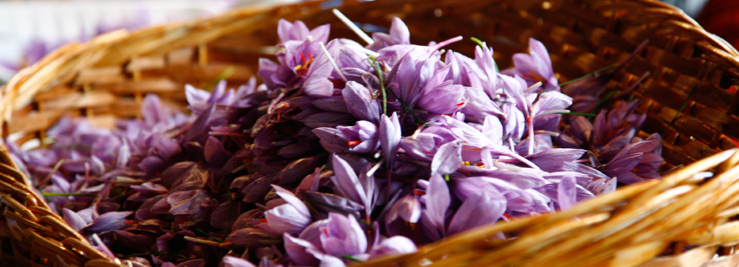

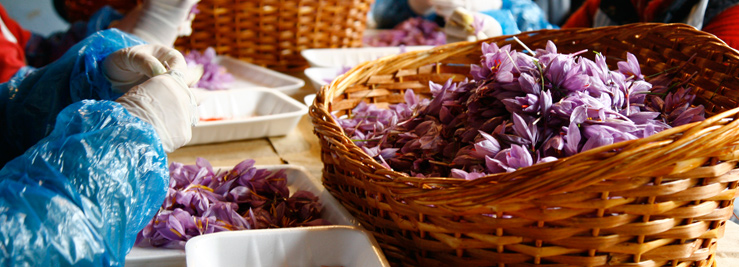


Saffron has an aroma and flavour which cannot be duplicated. It has a chemical make-up, which, when understood, assists the chef or home cook to know how to best release the flavour in cooking and baking.
Commercial saffron comes from the bright red stigma of the saffron crocus (Crocus sativus) which flowers in the Autumn in many saffron producing countries, including Greece, India, Iran, Afghanistan, Spain and now Bulgaria.
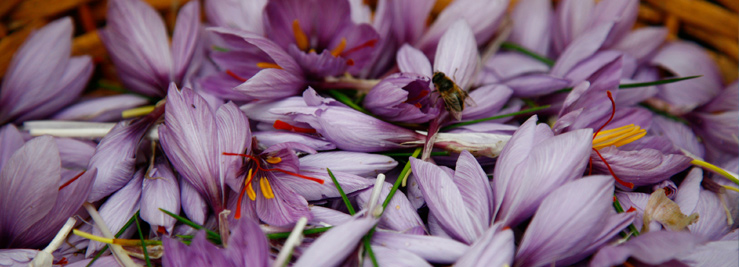
The Crocus sativus stigma is the female part of the flower. In a good year, each saffron crocus plant could produce several flowers. Each flower has three stigmas, which are seperated and dried to become commercial saffron. Each stigma is like a little capsule that encloses the complex chemicals that comprise of the saffron aroma, flavour and colouring.
The male part of the saffron flower, the stamens, is half the size of the stigma. It is deep yellow and has no culinary value.
The quality of the saffron is determined by three chemicals in the stigma, crocin (colour), pirocrocin (flavour), and safranal (aroma). The International Organisation for Standardization, ISO 3632 defines values for those characteristics corresponding to the three grades of saffron, 1 2 and 3, with 1 being the highest quality.